

Empowering students with language-based learning differences
Siena Blog



News
The Siena School Blog
Discover, Learn, Celebrate, and Empower
Welcome to Siena's blog, your source for helpful, cutting-edge resources tailored to teachers, parents, and other advocates in the learning differences community. We are dedicated to providing a wealth of curated knowledge spanning various topics, ranging from dyslexia advocacy and awareness to classroom teaching strategies, heritage month profiles, and social and emotional health.
Discover innovative classroom strategies that inspire creativity and foster a love of learning.
Our commitment to social-emotional wellness ensures that we provide valuable insights into healthy student development and self-advocacy.
Discover resources, reading and podcast recommendations, volunteering opportunities, and more for parents in the LD community.
Our important heritage month posts highlight key people, offer reading and podcast recommendations, and more.
Posts Tagged "Summer~Break"
Summer Reading for Siena Teachers
July 21, 2025

Avg. read time: 4 min.
Siena’s dedicated, talented teachers know that summer reading isn’t just for students. As they’re transitioning between school years, our teachers continue their professional development by engaging with books related to their fields and to LD education more broadly.
For teachers in the LD community, it’s important to keep teaching approaches fresh and research-grounded to best support students with dyslexia and other language-based learning differences.
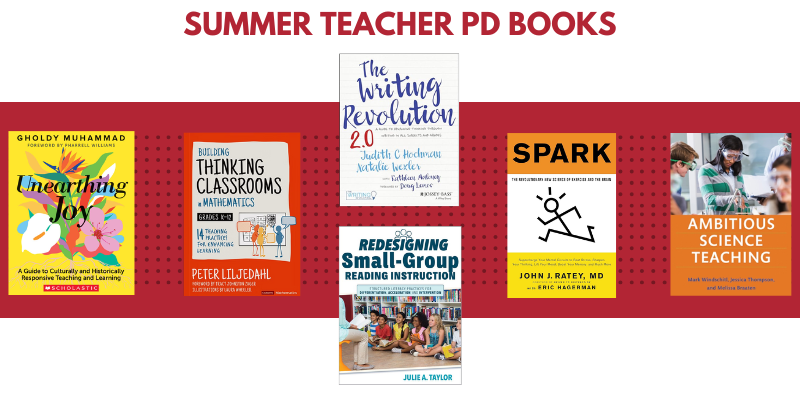
Summer Teacher Reading List
Reading Department
Redesigning Small-Group Reading Instruction: Structured Literacy Practices for Differentiation, Acceleration, and Intervention — Julie A. Taylor
Why We’re Reading It: Siena’s small classes mean that our dedicated literacy instruction centers students’ diverse learning needs, styles, and reading fluency. Siena’s reading teachers daily address the five essential areas of reading instruction (phonemic awareness, decoding, comprehension, fluency, vocabulary) through multisensory instruction in flexible student groupings. This book will further support our reading teachers' work to strengthen students' auditory and visual memory in reading and spelling through structured exercises using movement to learn and remember new words and develop their sense of left-right directionality.
Humanities Department
Writing Revolution 2.0 — Judith C. Hochman and Natalie Wexler
Why We’re Reading It: Writing is a key part of our curriculum at Siena. This updated edition of Writing Revolution supports our teachers’ evolving approaches to writing instruction by providing important classroom activities and methods to address our students’ writing needs, such as their organization, revision, research, peer review, and analytical skills.
Math Department
Building Thinking Classrooms in Mathematics — Peter Liljedahl
Why We’re Reading It: This book complements Siena’s inquiry-based math courses and offers research-based best practices to further develop our students’ understanding of mathematical concepts and skills.
Science Department
Ambitious Science Teaching — Mark Windschitl, Jessica Thompson, and Melissa Braaten
Why We’re Reading It: Our science teachers are reading this book to strengthen how they help all students engage deeply with science. Ambitious Science Teaching focuses on ways to make science lessons clear, meaningful, and accessible—no matter a student’s background or experience. It offers practical strategies to spark curiosity, support student thinking, and encourage rich classroom discussions. By using this approach, Siena teachers aim to help students build strong science skills like explaining ideas with evidence, modeling, and thoughtful questioning—all while making sure every student has a voice and a chance to succeed.
Department Chairs
Unearthing Joy: A Guide to Culturally and Historically Responsive Teaching and Learning — Gholdy Muhammad
Why We’re Reading It: This book continues to support Siena’s commitment to diversity and equity inside and outside the classroom. This will deepen our teachers’ efforts to create meaningful, inclusive, and joyful learning experiences for all students. In this follow-up to Cultivating Genius, Dr. Gholdy Muhammad adds joy as a key focus—alongside identity, skills, intellect, and critical thinking. The book highlights how centering students’ cultures and histories can inspire a stronger sense of purpose and connection in the classroom.
Athletics and P.E.
Spark: The Revolutionary New Science of Exercise and the Brain — Dr. John Ratey
Why We’re Reading It: Movement is very important to all aspects of learning at Siena, and our students benefit both physically and mentally from regular P.E., recess, and other forms of movement inside and outside the classroom.
Siena Reading Resources
If your student needs some extra reading for the rest of the summer, see this Student Summer Reading blog post from 2024 for diverse elementary, middle school, and high school titles.
Need some more reading recommendations from The Siena School blog? See previous posts from the 2024-25 school year commemorating AAPI Heritage Month, Women’s History Month, Black History Month, and Hispanic Heritage Month.
The Siena School, a national leader in dyslexia education, serves bright, college-bound students with language-based learning differences on DC Metro area campuses in Silver Spring, MD (grades 3-4 and 5-12) and Oakton, VA (grades 3-12).
Posted in
Parents and Community