

Empowering students with language-based learning differences

Siena Blog



News
The Siena School Blog
Discover, Learn, Celebrate, and Empower
Welcome to Siena's blog, your source for helpful, cutting-edge resources tailored to teachers, parents, and other advocates in the learning differences community. We are dedicated to providing a wealth of curated knowledge spanning various topics, ranging from dyslexia advocacy and awareness to classroom teaching strategies, heritage month profiles, and social and emotional health.
Discover innovative classroom strategies that inspire creativity and foster a love of learning.
Our commitment to social-emotional wellness ensures that we provide valuable insights into healthy student development and self-advocacy.
Discover resources, reading and podcast recommendations, volunteering opportunities, and more for parents in the LD community.
Our important heritage month posts highlight key people, offer reading and podcast recommendations, and more.
Posts Tagged "breathing~exercises"
Calming Strategies in the Classroom
December 10, 2025
Avg. read time 5-6 min.
Imagine your student is in the classroom learning a new lesson and begins to feel anxious. They don’t want to miss the lesson or lose learning time, but they also want to avoid feeling the big feelings!
The Take a Break Space: Calming Strategies in the Classroom folder that The Siena School uses is specifically designed to help students take a few minutes to (re)focus their attention on a multisensory coping strategy to reset and reengage in the lesson. It collects intentional calming tools and strategies that are helpful for all Siena students to go from “Fight, Flight, and Freeze” to “Rest and Digest.”
Also, it promotes relaxation and better focus by shifting attention from dysregulation to mindful soothing stimuli, creating a safe space for self-regulation.
Classroom Calming Strategies for Teachers
It’s very important to give students ready access to calming images and other strategies during the school day. Among other social-emotional benefits, this makes taking care of their mental health a multisensory experience for them, as well as complements their academic development.
Sensory-focused activities remind our students to pay attention to the physical sensations accompanying their emotions. This expands the social-emotional experience and understanding for our students, reminding them that their emotions have a purpose and encouraging reflection on why that feeling happened. When they understand the why, they can then have greater awareness of what they need and ask for it.
Siena teachers are encouraged to remind students to utilize the Take a Break folder and actively send the student to the calming space for a reset. This allows for the student to feel empowered to take the break they need, as well as have agency over the strategy they choose to reset. The anchoring message here is “It’s okay to take a break” for students and teachers alike.
Calming Tools for Classroom Use
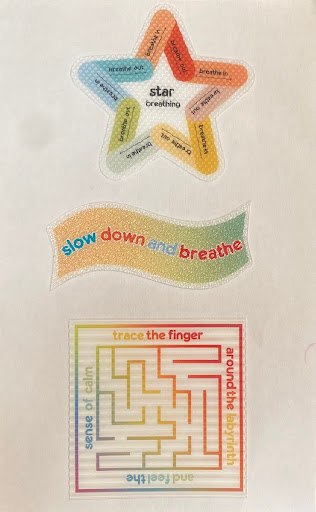
Siena teachers on all three campuses have access to our Take a Break folders, and the counseling team will be visiting homerooms for all grades. These folders are full of print graphics, short affirmative meditations, and more, such as:
- Coloring pages — Coloring (or drawing) can greatly help students focus their energy in the moment to help them regulate, particularly when it’s a more detailed design that requires slow and careful movements and focus. See Creative Color Lab for examples that we’ve used at Siena.
- Tactile stickers — Students can add sensory strip stickers to their water bottles, computers or anything else they carry for easy, portable access to calming exercises (such as Star Breathing).
- Positive affirmations — Students can use these short phrases (such as “I am here. I am safe” and “I deserve to be seen”) to ground themselves in moments of dysregulation or self-doubt.
- Spot It/Name It Graphics — Using A Little Spot of Feelings and Emotions (from artist Diane Alber) helps students to “spot” their emotions and clues to better understanding what they are feeling and why. Students in Social and Emotional Learning classes are practicing writing and communicating “I” statements with blanks for them to specify their feelings — such as, “I feel confused when I’m in math class because I don’t understand yet. I need to ask for help.”
- Movement exercises — This helps our students to take an in-class movement break discreetly. The goal is to provide an opportunity to practice movement without disruption. One way we do this is by encouraging them to move to the back of the room and do quiet body stretches; those who want to stay seated can do chair yoga to get those wiggles out.
See these Calming Posters for Your Break Space from Teachers Pay Teachers for additional visual resources for use in classrooms and counseling offices.
How Parents Can Support Students at Home
We all need to take a break throughout the day. Whether it's for 5 minutes to step away and shift your surroundings or to take your full lunch break, we should be telling ourselves “It’s okay to take a break” and mentally reset for whatever task is in front of us.
Parents can talk to their children about strategies that help them to feel focused, confident, and capable in the classroom. Make a list and practice role-play exercises of the “I” statement so they feel assured in communicating their emotions and what they need for success. When they do share a difficult moment in their day, validate their feelings and help them reflect on what they can learn from their experience or what they can do differently next time to feel better.
Resources from Siena’s Blog
Siena’s individualized approach creates a safe, responsive, and nurturing environment that supports our students’ academic and emotional well-being. Our teachers and staff also encourage students to use quiet, focusing fidgets in the classroom to regulate their emotions and ease stress. See this blog post about the benefits of fidgets for Siena students. For more on the value of fidgets for neurodiverse students read The Science Behind Fidget Toys.
See other posts of interest in our Social and Emotional Health blog category, such as these about learning differences and confidence and online and offline boundaries for teens.
The Siena School, a national leader in dyslexia education, serves bright, college-bound students with dyslexia and other language-based learning differences on DC Metro area campuses in Silver Spring, MD (grades 3-4 and 5-12) and Oakton, VA (grades 3-12).
Posted in
Social and Emotional Health