

Empowering students with language-based learning differences

Siena Blog



News
The Siena School Blog
Discover, Learn, Celebrate, and Empower
Welcome to Siena's blog, your source for helpful, cutting-edge resources tailored to teachers, parents, and other advocates in the learning differences community. We are dedicated to providing a wealth of curated knowledge spanning various topics, ranging from dyslexia advocacy and awareness to classroom teaching strategies, heritage month profiles, and social and emotional health.
Posts Tagged "middle~school"
Winter Break Podcast Recommendations
December 14, 2022
Keep your high school and middle school students excited about learning and knowledge over winter break with these podcast recommendations from Siena students and faculty.
Podcast Recommendations for Teens
Check out these history, culture, and society podcasts for your teen:
- The Daily Show with Trevor Noah
- Footnoting History
- Forever Ago
- Let's Be Real with Sammy Jaye
- Outside Magazine Podcast
- Pop Culture Happy Hour
- Spilled Milk Podcast
- Stuff You Should Know
- Uncivil
Is your teen interested in science and related topics? Give these podcasts a listen:
- 60-Second Science
- Are We There Yet?
- Brains On!
- Hidden Brain
- How I Built This
- Invisibilia
- Radiolab
- Science Friday
- Science Rules!
- Wow in the World
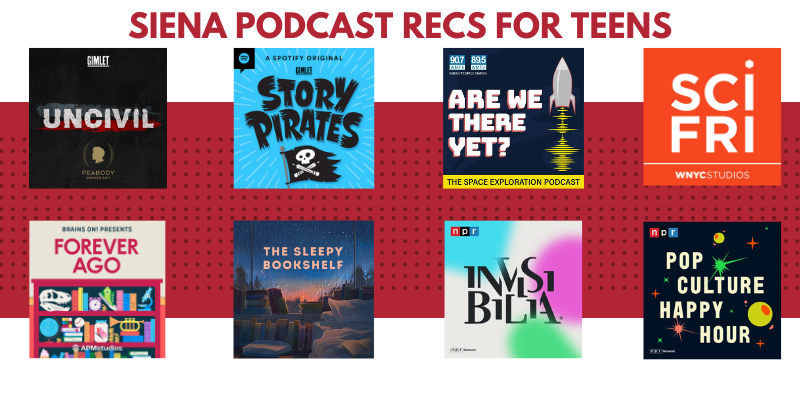
Teens interested in books, music, and storytelling can try out these podcasts:
Give these family-friendly podcasts a listen:
More Podcast Resources
Common Sense Media lists these Great Podcasts for Tweens and Teens, and Parents magazine recommends 9 Great Podcasts for Teens. See Siena’s blog for winter break book recommendations and summer break book recommendations. See also this earlier blog post about podcasts from Siena Reading Teacher Leslie Holst.
Siena’s mission-focused innovative dyslexia education is designed for students in grades 3-12 with language-based learning differences on campuses in Silver Spring, Maryland, and Oakton, Virginia.
Posted in
Parents and Community
Winter Break Reading at Siena
December 14, 2022
Looking for book recommendations to support dyslexic readers heading into winter break? Let Siena’s elementary and middle school teams help.
With winter break approaching, it’s important for students—especially ones with language-based learning differences—to read for at least 20 minutes a day to keep their literacy, decoding, and related skills honed. Regular daily reading will help keep students engaged through winter break with a variety of enjoyable, teacher-recommended books, series, graphic novels, short story collections and more.
Elementary School Book Recommendations
Here are some of our elementary classes’ top book recommendations this year so far, as suggested by elementary teachers:
- City Spies by James Ponti
- Nick and Tesla’s High-Voltage Danger Lab by Bob Pflugfelder and Steve Hockensmith
- The Mystery of Black Hollow Lane by Julia Nobel
- The Greystone Secrets #1: The Strangers by Margaret Peterson Haddix
- Flunked: Fairy Tale Reform School #1 by Jen Calonita
Elementary student Ania recommends Flunked: “I thought it was really interesting, and I liked that I never knew what was going to happen next.” Ania’s classmate Grayer really enjoyed Nick and Tesla’s High-Voltage Danger Lab: “It was a good book. It was fun to read about the brother and sister making things with their uncle in his lab.”
.png)
Middle School Book Recommendations
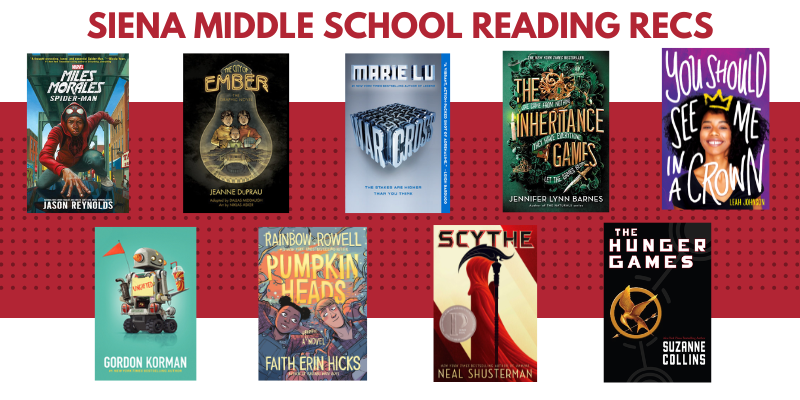
Teachers from Siena’s middle school English and Reading teams recommend these books for readers in 6th to 8th grades:
- Miles Morales: Spider-Man by Jason Reynolds
- City of Ember: The Graphic Novel by Jeanne DuPrau (Adapted by Dallas Middaugh)
- Warcross by Marie Lu
- The Inheritance Games by Jennifer Lynn Barnes
- You Should See Me In a Crown by Leah Johnson
- The Hunger Games by Suzanne Collins
- Ungifted by Gordon Korman
- Scythe by Neil Shusterman
- Pumpkin Heads by Faith Erin Hicks
Resources for Book Recommendations
Young readers who prefer audiobooks can look for these and other books in the offerings from Learning Ally, Audible, and the Young Adult Library Services Association, among other resources.
Education consultant Ann Dolin wrote about engaging reluctant readers over summer break, including a handful of recommendations for different ages and suggestions for reading as a family. Although winter break is shorter than summer, parents could adapt some of Dolin’s ideas for their students—such as starting a book series to pique their interest in the next few weeks.
Whether it’s over winter or summer break, giving students some control over the process of selecting books when they’re not in school can motivate them to read for at least 20 minutes a day.
Here are some additional resources to help students with summer reading:
- Fairfax County Public Library Teen Events and Resources and Montgomery County Public Library For Teens offer recommendations, events, programs, and more. Check public libraries in your area for similar summer reading services for young people.
- The National Education Association offers ample resources, activity ideas, and links for families to find diverse books.
- The New York Public Library’s Staff Picks for Teen Readers goes back to Spring 2019 and lists English- and Spanish-language books. The NYPL blog also has expert-curated lists of books and other materials for school-aged readers.
See Siena’s blog for winter break podcast recommendations, summer reading recommendations, and posts about authentic assessments at Siena and about a handful of Siena alumni who’ve returned as staff members.
The Siena School, a national leader in dyslexia education, serves bright, college-bound students with language-based learning differences on campuses in Silver Spring, MD (grades 3-12) and Oakton, VA (grades 3-11).
Posted in
Parents and Community
Summer Reading at Siena
July 26, 2022
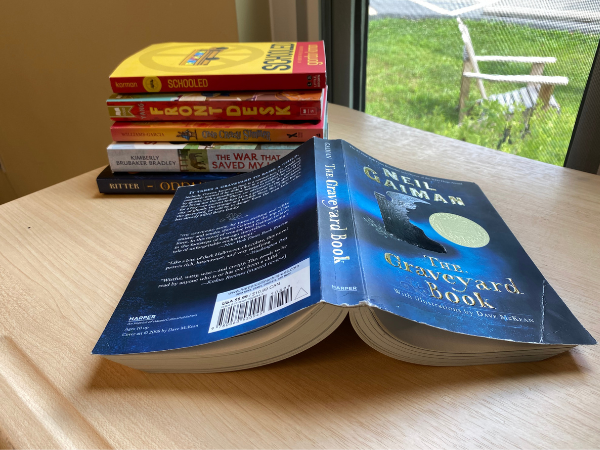
Benefits of Summer Reading
Summer reading is important for students’ academic and social-emotional development, but how can they find age-appropriate books that are also interesting and relatable to their experiences?
As this 2021 post from Scholastic points out, “Summer reading is critical, not only for helping kids maintain learning while school is out, but also for fostering social–emotional development, discovering the joy of stories, and elevating the importance of lifelong learning.”
Summer reading—even 15-20 minutes a day—helps students with dyslexia and other language-based learning differences: it will keep their reading, retention, and decoding skills sharp in preparation for the coming school year. Regular reading also helps students’ social–emotional skills by sharpening their awareness of the world, as well as increasing their empathy and ability to understand various points of view.
Getting students to read over the summer can be a challenge. But knowing what their peers have read and enjoyed can help, especially when students have diverse stories, characters, identities, and genres to choose from.
Summer Reading Recommendations for Teens and Tweens
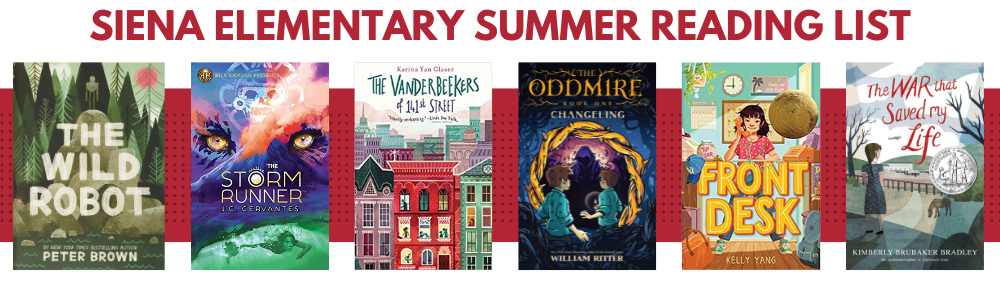
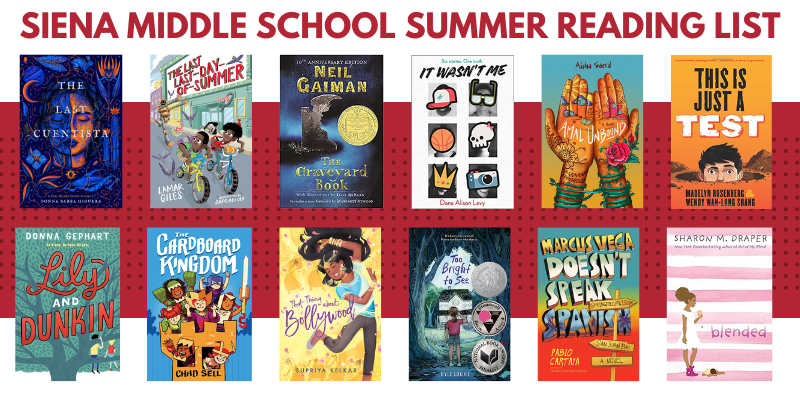
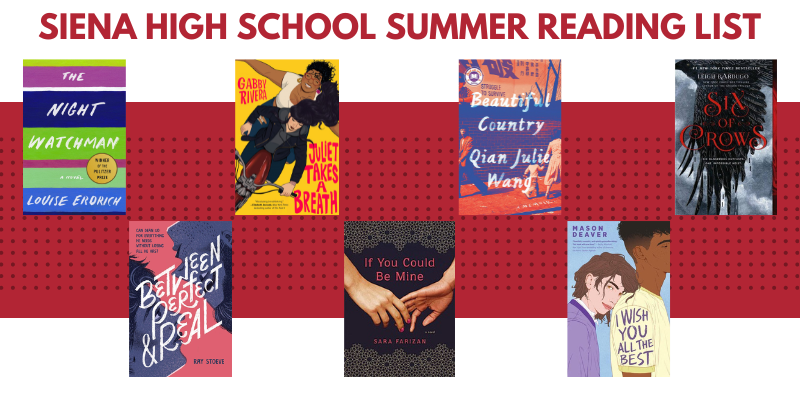
At the end of the school year, Siena teachers shared summer reading packets, which included recommendations and class readings for students across all grade levels. Teachers typically assemble their own reading lists to share with students, and they always choose a variety of books that reflect Siena’s diverse community and curriculum. Here are some of the books Siena’s students have been reading this summer:
To further help students and parents, Siena Humanities chair and middle school English teacher Beth Fabijanic shared that the Young Adult Library Services Association (a division of ALA) offers ample recommendations for teen/tween readers, including:
- Quick Picks for Reluctant Young Adult Readers
- Best Fiction for Young Adults
- Great Graphic Novels for Teens
Students who prefer to listen to books—or who perhaps want to read along while listening—should also explore the audiobook selections on Amazing Audiobooks for Young Adults, Learning Ally, Audible, and Audiobook Sync (which updates free audiobooks for teens every week).
Resources for Summer Reading
“Children often react very differently when a parent or teacher tells them to do something compared to when they make a decision on their own,” this Dyslexia Resource post from 2020 observes. “When age-appropriate, encourage growing readers to develop their independence by allowing them to create their own summer reading schedule. While beginner readers should read around 20 minutes each day, leave the rest up to your student.”
Choosing their own daily reading time can give students a sense of control over the process, while the routine of summer reading can prepare them for the more structured days of the school year.
Here are some additional resources to help students with summer reading:
- Education consultant Ann Dolin recently wrote about engaging reluctant readers over the summer, including a handful of recommendations for different ages and suggestions for reading as a family.
- Fairfax County Public Library Teen Events and Resources and Montgomery County Public Library For Teens offer recommendations, events, programs, and more. Check public libraries in your area for similar summer reading services for young people.
- The National Education Association offers ample resources, activity ideas, and links for students to Get Serious About Summer Reading.
- The New York Public Library’s Staff Picks for Teen Readers goes back to Spring 2019 and lists English- and Spanish-language books.
Siena’s blog has more helpful resources for summer, including how students can improve their technology skills over the summer and how summer academics and camps can be beneficial.
Posted in
Parents and Community
Recent Posts
Categories
Archives
Welcome To Siena