Empowering students with language-based learning differences


Siena Blog



News
The Siena School Blog
Discover, Learn, Celebrate, and Empower
Welcome to Siena's blog, your source for helpful, cutting-edge resources tailored to teachers, parents, and other advocates in the learning differences community. We are dedicated to providing a wealth of curated knowledge spanning various topics, ranging from dyslexia advocacy and awareness to classroom teaching strategies, heritage month profiles, and social and emotional health.
Discover innovative classroom strategies that inspire creativity and foster a love of learning.
Our commitment to social-emotional wellness ensures that we provide valuable insights into healthy student development and self-advocacy.
Discover resources, reading and podcast recommendations, volunteering opportunities, and more for parents in the LD community.
Our important heritage month posts highlight key people, offer reading and podcast recommendations, and more.
Archives - September 2025
Dyslexia-Friendly Book Editions
September 26, 2025
Avg. read time 3 min.
Dyslexia Awareness Month 2025
For Dyslexia Awareness Month 2025, Siena is taking the opportunity to highlight a promising new initiative from some book publishers: dyslexia-friendly editions of adult and young adult books. These offer dyslexic readers another option for print books by using certain font choices and page design elements to ease readability.
Dyslexia-Friendly Book Editions
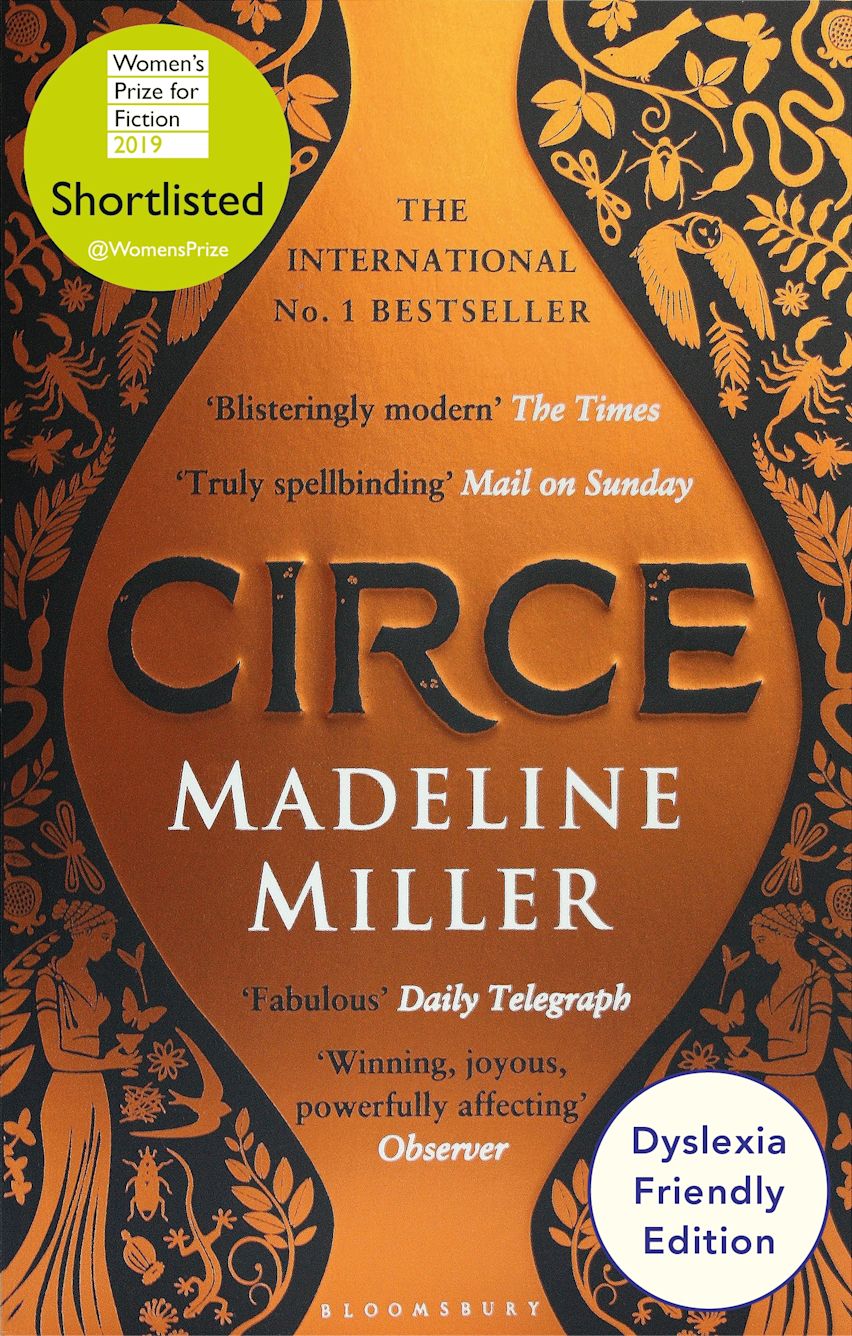
Two presses headquartered in England, Bloomsbury and Books on the Hill Press, have published several dyslexia-friendly book editions in the past few years.
Bloomsbury editions released in the past year include Circe and Song of Achilles by Madeline Miller, Piranesi by Susanna Clarke, and The Kite Runner by Khaled Hosseini. Books on the Hill Press has also offered dyslexia-friendly versions of such classics as Jane Eyre, Frankenstein, and selected Sherlock Holmes stories, among many other titles. In addition, they’ve also published versions of contemporary books by Bernard Cornwell and Garth Nix.
Jess Stevens, Rights Assistant for Bloomsbury's Adult Trade titles, shared in this short piece on their website that, as someone with severe dyslexia, she saw a need for such books and then pitched the idea to Bloomsbury in 2021:
When you’re young it’s because you don’t know the rules around reading and spelling. But as you get older, whilst those are still issues you encounter, they are joined by difficult formats, font choices and paper colour, adding to an already taxing experience.
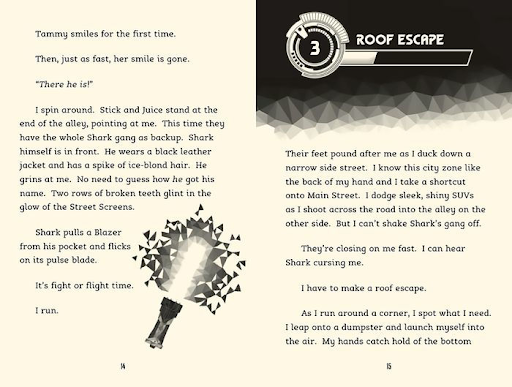
Bloomsbury’s dyslexia-friendly editions use a sans-serif font and cream-colored paper with blue text to increase contrast and thus accessibility for dyslexic readers.
The dyslexia-friendly editions from Books on the Hill Press adopt a similar approach, using a larger, sans-serif font and generous line spacing to ease reading and processing. Books on the Hill Press was founded by Dr. Alistair Sims, who is dyslexic and co-owns and -operates a bookstore with his sister in Clevedon near Bristol, England.
“People assume that, if a book is for dyslexic adults, then it’s simplified in plot and language, but it’s not. We’re not really changing the contents, we’re changing the formatting to make it easier to read.” Learn more about Sims and Books on the Hill Press in this 2024 article from The Guardian.
There’s hope from Stevens, Sims, and others in the industry that this trend will catch on among major publishing houses to further expand availability for dyslexic readers.
Resources for Publishing Accessibility
Here are some additional resources for dyslexia-friendly reading:
- Books to Get Kids Reading (Dyslexia Help)
- Dyslexia Friendly Books for Children (Barrington Stoke Books)
- Some of these have Kindle editions with text that can be adjusted (e.g., size, font, color, margins, spacing, alignment)
- Everyone Can Be A Reader (Barnes & Noble)
- These editions use specialized fonts, paper tones, and formatting to increase readability across a wide range of age and interest levels. There is also a dedicated section and signage in Barnes & Noble stores.
- Flyleaf Publishing
Siena Resources
Remember that Siena’s intentionality of communication for the LD community applies to our website: the LD-friendly dyslexie font can be activated by clicking on the Dyslexie icon on the top right corner (desktop) or bottom left corner (mobile) of our website.
Click here for some Helpful Resources on dyslexia, ADHD, college preparedness, and more. You can also explore our series of blog posts on Teacher Resources, Social-Emotional Health, and Cultural Heritage Spotlights.
The Siena School, a national leader in dyslexia education, serves bright, college-bound students with language-based learning differences on DC Metro area campuses in Silver Spring, MD (grades 3-4 and 5-12) and Oakton, VA (grades 3-12).
Posted in
Teacher Resources
Spotlight on Zoe Saldaña
September 15, 2025
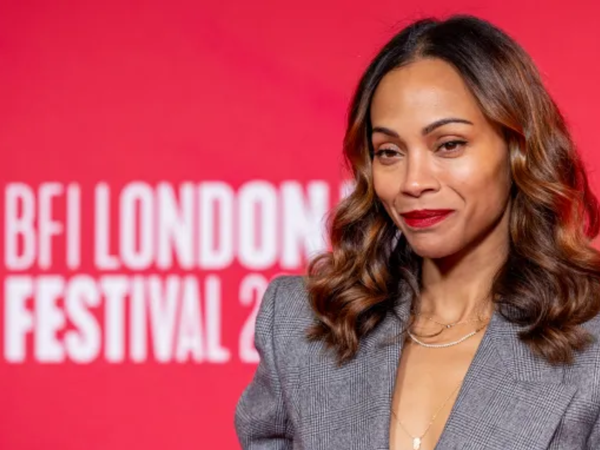
Photo Credit: Tristan Fewings/Getty Images
Avg. read time: 4 min.
Hispanic Heritage Month 2025
The theme of National Hispanic Heritage Month 2025 is Honoring the Past, Inspiring the Future.
Observed annually from September 15th to October 15th, National Hispanic Heritage Month celebrates the history and culture of the U.S. Latino and Hispanic communities. During this important month celebrating Hispanic history and culture, Siena is highlighting film and television star Zoe Saldaña for her inspiring artistic and cultural contributions as an Afro-Latino actress with dyslexia.
Zoe Saldaña’s Dyslexia
“When you have a child that has ADHD and is dyslexic and has a lot of energy and doesn’t sit still and is unable to listen, you think that it’s on purpose. I just remember asking myself, ‘Why don’t I fit in? Why do I do this?’ It would make me really sad, and it would make me feel really isolated.” —Zoe Saldaña in Harper's Bazaar
Born in northern New Jersey, Saldaña began her film and TV acting career in the late 1990s. Saldaña identifies as Afro-Latino of Puerto Rican and Dominican heritage, with Spanish as her home language. She also has Lebanese and Haitian family roots.
She is especially well known for her roles as Neytiri in the Avatar franchise, Lieutenant Uhura in the recent Star Trek films, and Gamora in the Guardians of the Galaxy trilogy and other MCU films. She’s also voiced characters in the animated films Elio and Vivo.
Saldaña has dyslexia and ADHD, which were diagnosed early in her life and led to problems in learning and remembering information. She has only recently been more public about how her learning differences and neurodiversity have affected her acting career. Saldaña has shared that she used to avoid more prominent roles that would’ve challenged her learning differences and anxiety.
Saldaña initially saw her role on the Paramount TV series Lioness as a welcome challenge, since writer Taylor Sheridan is known for dialogue-heavy scripts for such shows as Yellowstone and Mayor of Kingstown. As she reflected, “It’s very wordy. There’s a cadence to the way he wants the sort of dialogue in the scenes to be said.”
Like many in the LD community do regularly, Saldaña has adapted her learning style to her roles, such as getting her scripts well in advance or hiring a line reader to help her practice and memorize her dialogue. She told Variety Magazine in this article, “The worst thing that [Lioness writer Taylor Sheridan] can do is to change a scene last minute or add dialogue. That’s when I’m like, ‘Wait, wait, wait, that’s dyslexia 2.0’ — that will be the next step.”
Her role in the 2024 dramatic musical Emilia Pérez led to, among other accolades, both an Oscar and a Golden Globe award for Best Supporting Actress. She opened her Golden Globes acceptance speech by saying, “I know I don’t have much time. I have dyslexia, so I tend to forget when I’m really anxious.” (Watch the full speech here.)
She’s also drawn on her background as a dancer in performing her more physical roles, learning her lines, and adapting to changes. As Saldaña also shared in this Variety Magazine article, “by the time that scene [in Lioness] would come, it was an extension of who I was — like ballet. [...] The moment my brain realized that words are like a plié in a pas de deux, I was just like, ‘Ooh, a grand jeté is like a Taylor Sheridan monologue.’”
You can also watch this video on the Child Mind Institute website where Saldaña talks more about her dyslexia journey, sharing:
“Something that my older self would tell my younger self is [to] rely on those people that really believe in you and are really willing to genuinely listen to you. It does get better, but please speak up. Don’t live in silence, because who you are and what you do and what you’re going through is not wrong.”
National Hispanic Heritage Month Resources
Below are some additional resources to help commemorate Hispanic Heritage Month this year:
- View Hispanic Heritage Month Resources from the National Museum of the American Latino
- Look at These Books To Read for Latine & Hispanic Heritage Month from Penguin Random House
- Learn about the 25 Most Anticipated Books of 2025 from Latinx in Publishing
Siena Resources
Previous Heritage Month spotlights of notable people with dyslexia feature writer and activist Victor Villaseñor, artist Ignacio Gomez, and pro athletes Jewell Loyd and A’ja Wilson. Click here to see all of Siena’s Heritage Month Spotlights from previous years.
The Siena School, a national leader in dyslexia education, serves bright, college-bound students with language-based learning differences on DC Metro area campuses in Silver Spring, MD (grades 3-4 and 5-12) and Oakton, VA (grades 3-12).
Posted in
Cultural Heritage Month Spotlights