

Empowering students with language-based learning differences
Siena Blog



News
The Siena School Blog
Discover, Learn, Celebrate, and Empower
Welcome to Siena's blog, your source for helpful, cutting-edge resources tailored to teachers, parents, and other advocates in the learning differences community. We are dedicated to providing a wealth of curated knowledge spanning various topics, ranging from dyslexia advocacy and awareness to classroom teaching strategies, heritage month profiles, and social and emotional health.
Discover innovative classroom strategies that inspire creativity and foster a love of learning.
Our commitment to social-emotional wellness ensures that we provide valuable insights into healthy student development and self-advocacy.
Discover resources, reading and podcast recommendations, volunteering opportunities, and more for parents in the LD community.
Our important heritage month posts highlight key people, offer reading and podcast recommendations, and more.
Posts Tagged "learning differences"
Unlocking History Through Hands-On Learning: Siena 6th Graders Explore Ancient Egypt
December 02, 2025
Avg. Read Time 3-4 min.
At The Siena School, learning is not something students simply absorb — it’s something they experience. In the Fall 2025 semester, 6th graders from Siena’s Forest Glen campus dove into the world of Ancient Egypt through immersive, multisensory projects designed to build deep understanding, spark curiosity, and make history come alive.
Hands-On Learning at Siena
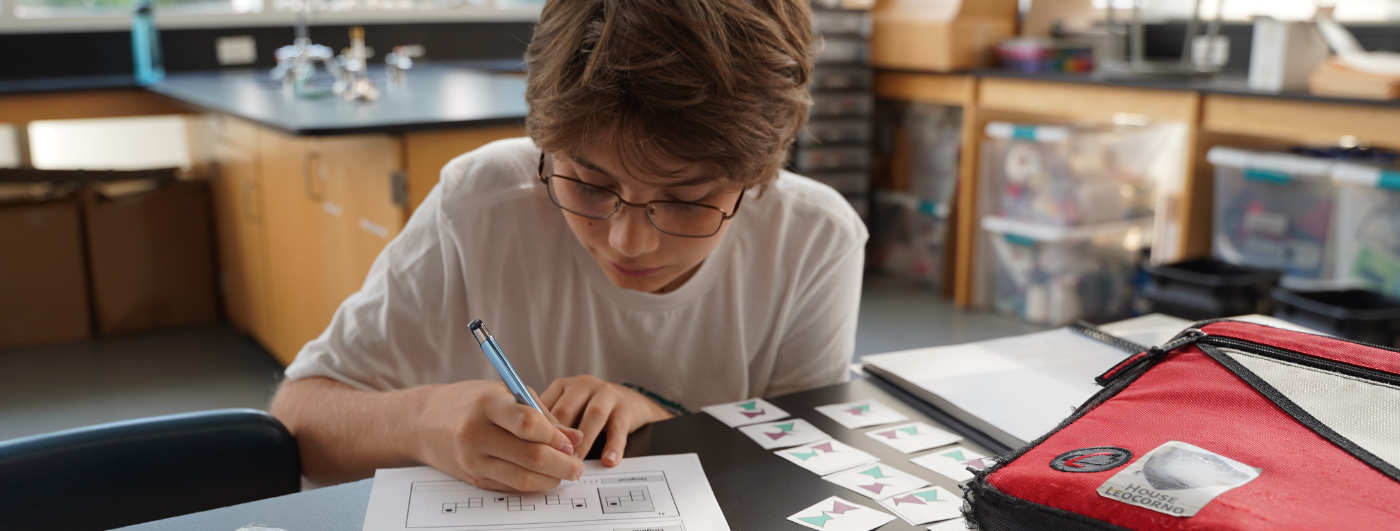
As part of their Social Studies unit on Ancient Egypt and pharaohs’ tombs with Siena middle school teacher Pinki Shah, students spent a week “mummifying” organs and crafting their own canopic jars. These creative activities highlighted the purpose and symbolism behind mummification, what was placed in a pharaoh’s tomb, and how Egyptians prepared for the afterlife.
Through the kind tactile learning that especially benefits students with language-based learning differences, the class explored:
- The religious beliefs that shaped burial practices
- The meaning behind preserving organs
- The artistry and ritual of canopic jars
- The human experience of preparing for an afterlife
This kind of experiential activity is exactly what Siena strives for — instruction that honors how bright, language-diverse learners thrive when given visual, hands-on pathways to understand complex material.
Mapping the Nile River
.jpg)
Lining the classroom walls are the students’ Nile River recreations — a vibrant visual demonstration of how geography shaped civilization. Ms. Shah’s students learned how the Nile flows from south to north, how the ancient Egyptians depended on the river’s predictability, and why pharaohs were buried at specific points along its banks.
By designing their own river systems, students used spatial reasoning, visual creativity, and multisensory design to grasp how environment, religion, and community structure intersected in Ancient Egypt.
Experiential Learning While Visiting Queen Nefertari’s Tomb
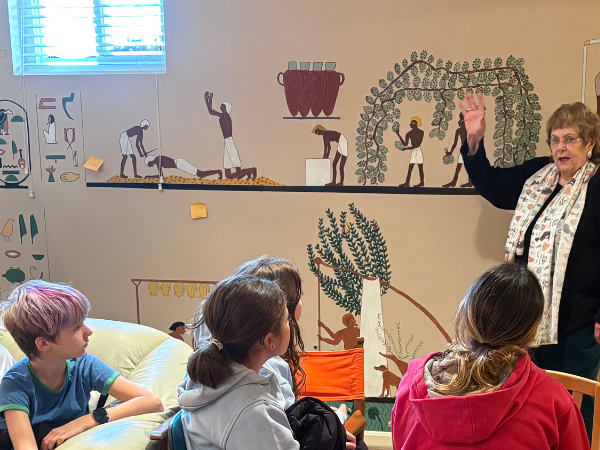
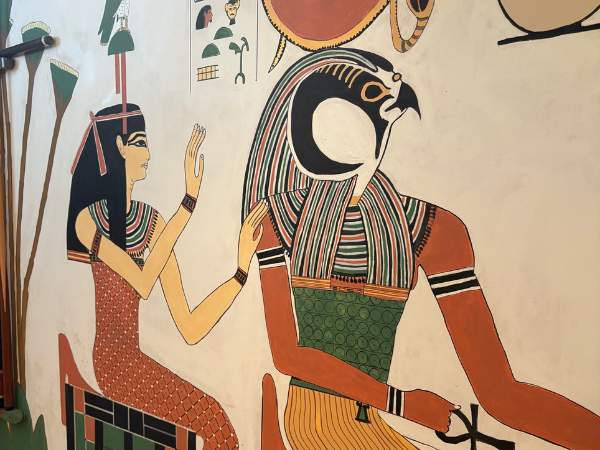
One of the highlights of the unit was a field trip to visit a detailed recreation of Queen Nefertari’s tomb at a nearby community member’s studio. Forest Glen 6th graders visited local resident and artist Emily, who spent three years hand-painting the tomb inspired by what she described as one of the “most beautiful” ancient spaces she saw during her travels. For Ms. Shah and her class, walking into the space felt like stepping back in time. Students were able to see:
- The religious symbolism painted on the walls
- Artistic styles used in royal burials
- The scale, colors, and storytelling that surrounded a queen’s journey to the afterlife
Students were quite impressed by this immersive art experience:
- “The art was so beautiful. I learned about the [scarab] beetles and how they walked around using the stars and found their way. I think it is really cool how she painted the whole basement [...]. Her art is beautiful and I'm glad I got to see it.” —Jayne
- “Her paintings were beautiful and I can't believe that she did them by herself! We learned about how she made them and why. She also talked about how she went to see an Egyptian tomb [in person]. She told us how they made the tombs and how they carved it. One new thing I learned is that the Egyptians carved in black granite with copper.” —Isabel
Emily’s meticulous and passionate work enriched students’ understanding far beyond what a textbook could provide. Her dedication to historical accuracy and artful recreation offered students an unforgettable (and tangible) connection to the content — and Siena is deeply grateful for her generosity.
Through project-based tasks, visual supports, creative expression, and real-world experiences like these, students not only learned history through this unit — they built meaning, made connections, and developed a richer understanding of human civilization.
Additional Siena Resources
See The Siena School blog for more posts of interest about Siena’s hands-on education, including The Benefits of Reading to Dogs, Making Career Possibilities Real for Students, and the benefits of Dyslexia-Friendly Book Editions.
The Siena School, a national leader in dyslexia education, serves bright, college-bound students with language-based learning differences on DC Metro area campuses in Silver Spring, MD (grades 3-4 and 5-12) and Oakton, VA (grades 3-12).
Posted in
Teacher Resources
How Can a Small School Benefit My Child?
October 27, 2025
Avg. read time 5-6 min.
Small School Benefits for LD Students
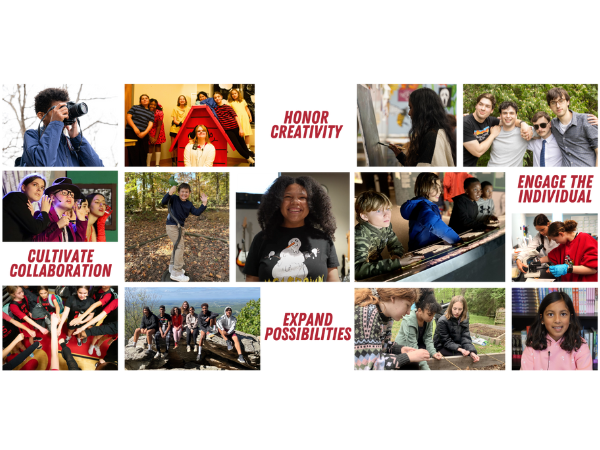
On our three campuses, Siena creates an individualized learning experience for each student to create a safe, responsive, and nurturing environment that supports their academic and emotional well-being.
Families often wonder what kind of educational environment will truly help their child thrive. At Siena, we understand that every learner’s path is unique — especially for students with dyslexia and other language-based learning differences. Our intentional approach to teaching and community can benefit students with dyslexia and other language-based learning differences in several important, complementary ways. At Siena, individualized instruction and a supportive community come together to help students with dyslexia.
Learn how a student-centric, mission-focused school like Siena can make a major difference for students in the LD community from elementary to middle and then high school.
Personalized Instruction for LD Students
Siena’s close-knit educational community allows our teachers to better understand each student's strengths, growth areas, and learning needs:
- LD students benefit from teachers who know them well and can adapt to their learning styles, so Siena maintains a maximum 10:1 student-teacher ratio across all courses. This means that our dedicated, expert teachers can personally engage every student and adapt curriculum materials to meet their learning styles. Read about Siena’s dedicated faculty and staff here on our website.
- Tailored instruction and regular support helps LD students understand how they learn best, providing them with ample opportunities for specialized education and self-advocacy from elementary through middle and high school.
- Being able to focus more of their attention on individual students, Siena teachers can strike a balance between academic rigor and encouraging student independence and academic risk-taking.
Classroom Flexibility and Attention
Personalized learning and individualized attention from Siena’s faculty helps create a learning environment of collaboration, empathy, and shared respect for our students. This translates into successful student learning and academic growth in a few ways:
- Flexibility in classroom settings nurtures personalized learning plans that accommodate students’ dyslexia, neurodiversity, and other learning differences.
- Direct access to specialists in reading, assistive technology, college counseling, annual internships, accommodations, and much more is key to student success. For example, our reading team offers regular targeted reading support through multisensory structured language approaches and daily reading intervention using Orton-Gillingham methodology.
- More attention helps with ongoing communication between families, staff, and classroom teachers to share student progress, adjust strategies as needed, and more.
Community and Confidence
Siena’s connected and student-focused community supports growth and confidence, as well as provides clear social–emotional benefits:
- Schools like Siena foster close-knit relationships between students, teachers, and families, creating a strong sense of community and belonging that benefits everyone.
- Because our students are less likely to fall through the cracks or feel invisible in a small school setting, they typically feel a sense of belonging and of being valued as learners.
- Positive relationships and regular check-ins with faculty and staff can boost self-esteem, which is especially important for LD students who may have faced learning setbacks elsewhere.
Success After Graduation
Siena’s high school program at our campuses in Silver Spring, MD, and Oakton, VA, focuses on our mission and supports our high school students and families in various ways.
- Siena’s personalized learning environment — where every student is known and supported — helps create successful and independent learners who are gradually prepared for college matriculation in each year of high school and then excel in whatever path(s) they choose after graduation.
- Our regular high school curriculum emphasizes academic rigor and individualized support to best prepare our students for their next academic step.
- A key feature of Siena’s high school curriculum is our dedicated college counselor and multi-year college counseling program. In working with students in grades 9-12, our college counseling program emphasizes college readiness, offers college representative visits, and more to break down the process of applying to and then attending college. Learn more about the college counseling program here.
Across all grade levels, Siena offers a personalized, strengths-based approach where teachers know each student deeply and tailor instruction to how they learn best. This intentional structure — rooted in research, relationships, small classes and individualized support — helps students build confidence, develop independence, and discover the joy of learning.
Resources from Siena’s Blog
See The Siena School blog for more posts of interest, including Why Is Early Intervention Important?, College Prep Begins in High School, and Learning Differences and Student Confidence.
Learn Why Siena Might Be Right for Your Child
The Siena School, a national leader in dyslexia education, serves bright, college-bound students with language-based learning differences on DC Metro area campuses in Silver Spring, MD (grades 3-4 and 5-12) and Oakton, VA (grades 3-12).
Posted in
Parents and Community
Decision Time: Summer School or Summer Tutoring?
December 18, 2020
Believe it or not, the school year is fast approaching the halfway point. For some parents, it’s time to start weighing options for the summer. Once summer camps and other traditional activities resume, families may feel students need more individual attention on academics to make up for any gaps in learning this past year.
Finding Appropriate Academic Programs and Local Tutoring Options
Education consultant Ann Dolin has written about parents’ summer anxiety regarding how to find the right amount of academic practice and intellectual rigor over the summer. After almost a year of online learning for many children, parents might not be seeing the typical gains in reading, math, and other skills. “You certainly don’t want a summer where kids aren’t involved in any learning at all, and that’s because they can lose up to two months of progress,” Dolin observed in 2019, “But you don’t want to go overboard, either.”
While summer school may have negative connotations for students, finding the right balance of rigor and relaxation to help parents keep their children learning is key. Summer academic programs and tutoring that adopt both approaches have significant benefits. Continued academic practice and specialized training throughout the summer are especially important for students with language-based learning differences to prevent summer slide regression in reading and writing skills.
The Siena School offers both summer academics and tutoring programs for area students (not just current enrollees) to offer a continuity of education between school years.
Summer Academics for Students with Learning Differences
Siena Silver Spring’s summer academic program provides students in grades 4–9 with a positive instructional experience that works on review, reinforcement, and enhancement of academic skills. Small classes and a nurturing environment provide fun and creative learning opportunities in reading, writing, and math skills and concepts. Students who participate in summer academic courses get the opportunity to experience the school on a smaller scale and ease into the school community. Seeing Siena’s curriculum, faculty, and strategies before the school year starts smooths students’ transition to a new school after they’ve gained comfort in a new learning environment.
Siena’s summer academic program provides the same individualized, multisensory approach practiced throughout the school year in a relaxed but rigorous setting. (See Siena’s academics page for more curriculum information.) Students learn and practice using assistive technologies, specific executive functioning techniques, and writing and reading skills that are applied in each class. It’s been consistently beneficial for our new students to attend summer academic sessions to start creating a community with other students who have similar learning differences.
By first learning new skills, technology, and strategies and then practicing them in class without the added pressure of grades, homework, tests, or quizzes, students can best prepare for the coming school year during the summer. Attending a summer academic session allows students an opportunity to build and practice using a toolkit of skills to carry with them into the fall.
Summer Tutoring for Students with Learning Differences
Another good option to prepare for the new school year is tutoring in specific subjects. Summer tutoring offers consistency of learning, new skill development, one-on-one instruction, and individualized learning—all at a pace structured for the child. Tutoring can give some structure to a student’s summer day and exposes them to healthy learning practices that they can then continue once the school year starts.
Siena Tutors, Siena’s virtual tutoring program, provides students in grades K-12 with a positive instructional experience focused on each individual’s growth in core academic subjects including reading, writing, math, science, and Spanish. We additionally offer tutoring services with a focus on executive functioning, which includes scheduling, prioritizing tasks, managing workloads, organization, and goal setting. See Siena’s tutoring page for more details about our program and tutors.
These individualized virtual tutoring sessions—which can be tailored to their needs—equip students with various skills applicable to both their virtual and traditional schooling. The tutors are educational professionals extensively trained in multisensory instruction and accustomed to individualizing lessons. By using the same multisensory approach that Siena does, these tutors offer students new strategies and tools while delivering important educational continuity.
Summer tutoring sessions can offer students an opportunity to preview next year’s curriculum if they struggle with information processing or executive functioning. This preview will help when a student accesses that curriculum the next school year. One-on-one time with a tutor enables solid review time for students to build on their skills and start a solid foundation for the next school year.
While summer school may sound scary for students, trying the approach of summer academics or summer tutoring might be a great compromise. Offering either option to your child this summer can still give you the desired end results of knowing the learning process will continue through those dreaded summer slide months.
Resources for Students with Learning Differences
- See The Siena School blog for posts about our multisensory and movement-based curriculum, as well as ideas for at-home work and free time over the summer.
- See Ann Dolin’s website and YouTube Channel for more resources and tips for avoiding the summer slide.
- LD Online and the Atlantic Seaboard Dyslexia Education Center (ASDEC) have a wealth of resources for families navigating academics and tutoring needs.
- Reading Rockets also has good information for finding a tutor for children with dyslexia.
Posted in
Parents and Community
Distance Learning: Tools and Tips for Success
March 19, 2020
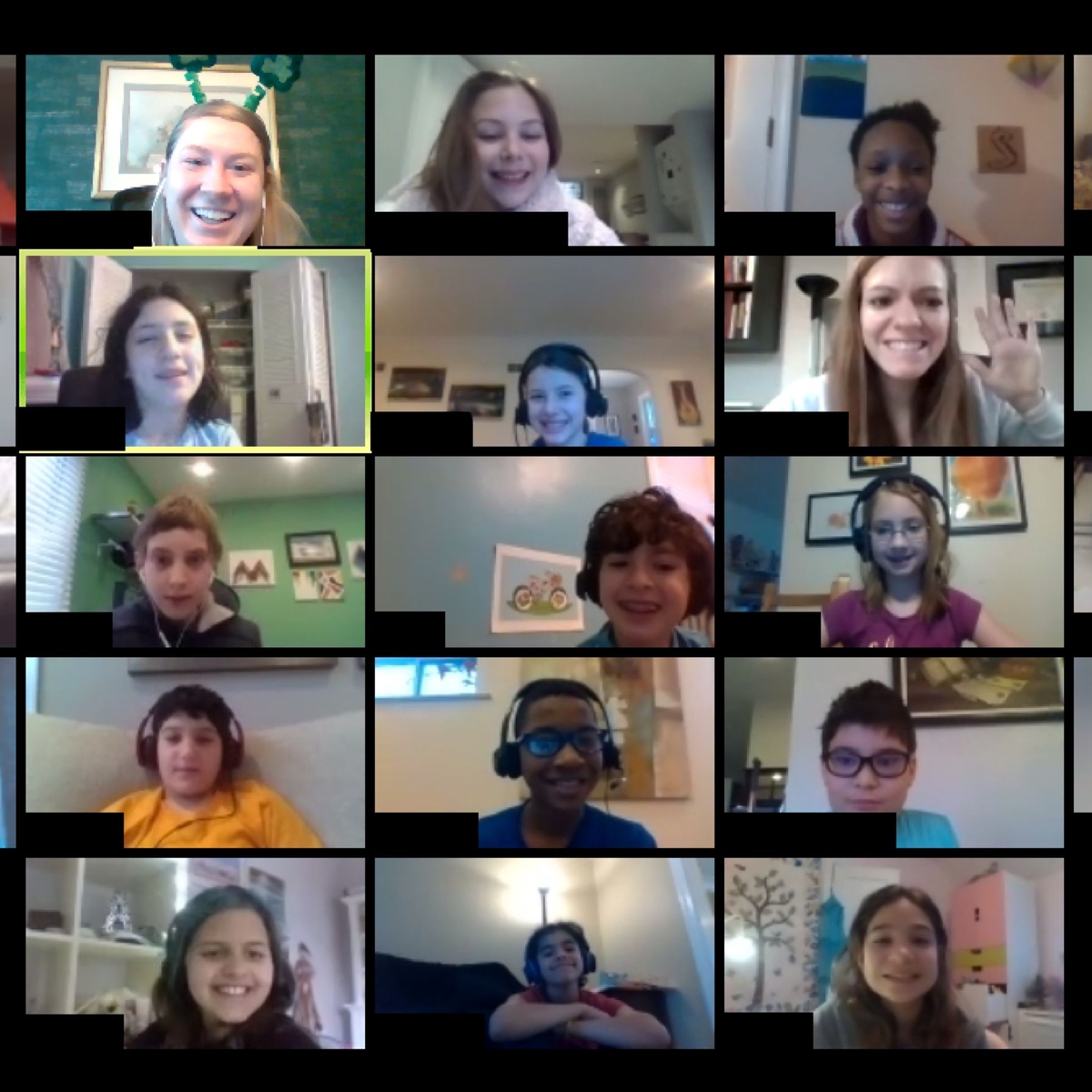
Distance learning is as much about staying connected to the school’s community and support network as it is about continuing instruction.
With school closings across the country, many families are abruptly facing the need to establish new routines and structure at home. Children find comfort in consistency so establishing a daily routine with expectations is important. Here are some helpful tips for families to keep students learning, connected, and focused on their work while classes are meeting virtually.
At-Home Flexible Seating
In addition to establishing a traditional workspace for your child, we encourage providing various options so that students have a choice of spaces for different types of activities. Students could use the following to situate themselves:





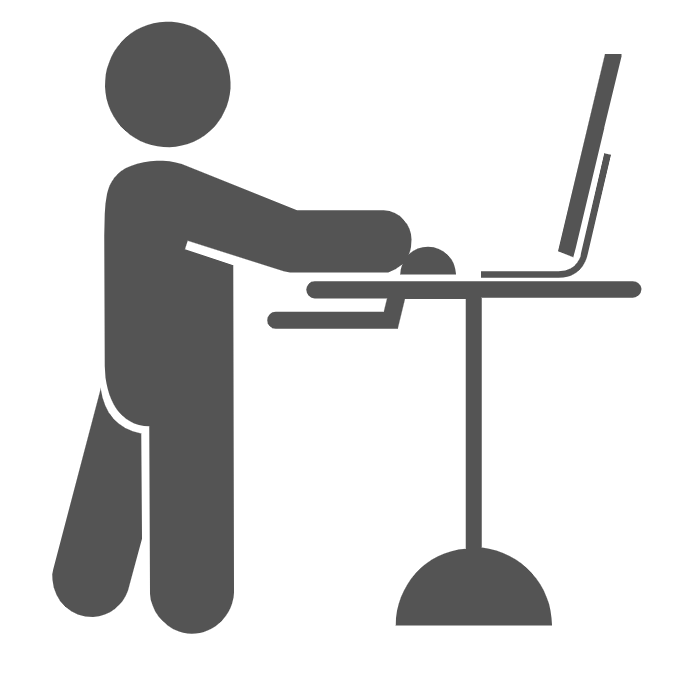


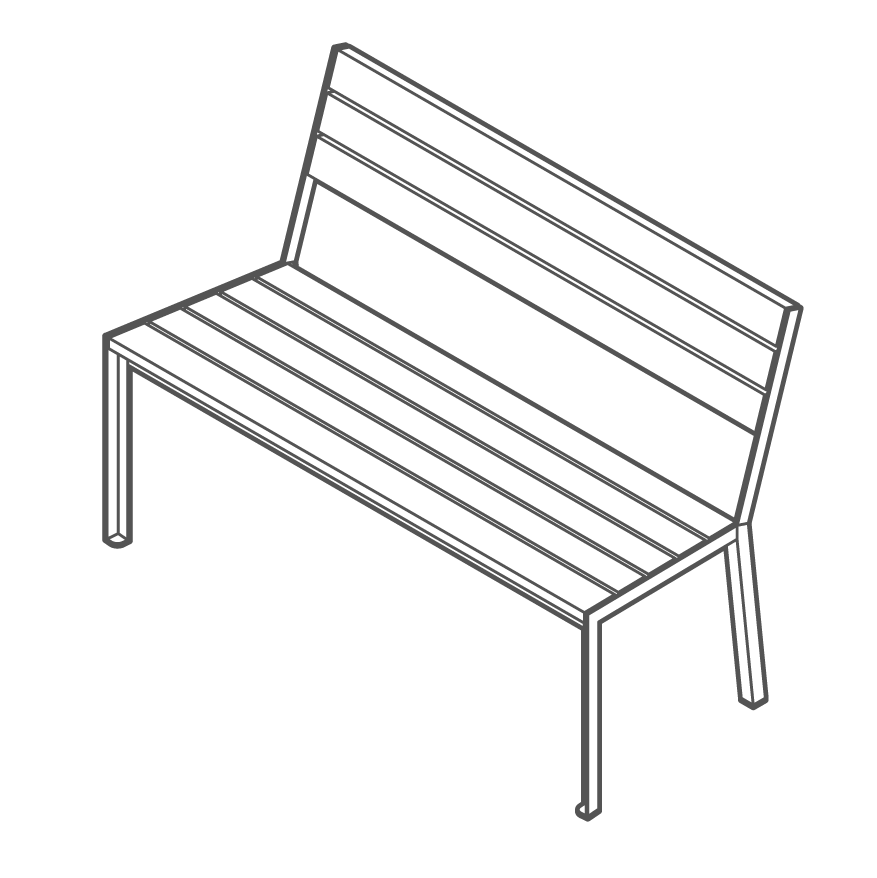
(If Safe & Space Is Available)
Different options are important for keeping students engaged and appropriately active. They also prevent extended sitting, allow for varied postures and positions, and can help with focus.
 Supplies
Having supplies accessible keeps students on task and cuts down on time away from their workspaces—and from instruction. Make sure students have ready access to:
- Headphones with a microphone
- Paper, pens or pencils, books, and other essentials
- Accessories for laptops, tablets, e-readers, and other charged technology
 Internet Access
A distance learning plan is contingent on Internet access. Consider how multiple people working online at home will affect your broadband speed, and then plan accordingly. Consider these as you adjust your home and family to distance learning:
- Where will each family member work?
- How many devices will be on the home network?
- With multiple members working online at the same time, is there enough bandwidth?
 Maintaining Routine
Structure is especially important with distance learning:
- Have a consistent schedule (e.g., regular wakeup, bedtime, breaks, or meals).
- Review your at-home routine each week with your child.
- Remind younger students what day it is, as it is easy to lose track of days of the week. E.g. is there a visual they can use at the beginning of the day to keep track?
- If provided, make sure students have easy access to the school’s daily schedule and grade-level information from their teachers.
- Incorporate breaks and free time. It’s important that students have time to be creative during the day.
- Allow time for transitions between tasks/activities.
- Think about your family’s needs when organizing your day. Have a ‘go to’ activity for younger children if you have an unexpected work call e.g. a puzzle book, a coloring book or audiobook/podcast.
- Know where you’ll store school-issued laptops and other technology when not in use. (Tip: don’t store tech in students’ bedrooms)
- Make snacks and lunch the night before (just as you would for a typical school day) so students can be independent and reduce interruptions as you work from home.
 Learning Expectations
Successful distance learning can mean replicating the in-school experience as much as possible, which also could mean adhering to school rules and expectations like:


A successful distance learning plan allows schools to continue instruction when the building is closed, as well as gives students the necessary continuity of education. Let’s invest in ensuring as smooth a transition as possible for students and families.
Siena will continue to share valuable tips and ideas as we learn more about creating a productive online learning environment for students and teachers. Be sure to follow these hashtags for more resources #onlinelearning, #elearning, and #remotelearning and for ideas specifically on learning differences #ldonlinelearning, #ldedonline.
Posted in
Teacher Resources